What do the USA, China, Sweden, and Israel have in common? Over the years, necessity has forced them to become largely self-sufficient. Sweden and Israel both have roughly 10 million people, or about 40% of what Australia has, so it’s not all about population size and the size of the domestic economy excuse doesn’t hold water either. So how does Australia’s sustainability as an investment destination look compared to other developed countries?
Using my country of birth Sweden as an example, it had the longest period of military neutrality (212 years) until it recently joined NATO in 2024. World War 2 therefore taught the country a lesson that it needed to ensure it could look after itself, and that drove a lot of decisions in the country for many decades. I recall growing up and having the Swedish made SAAB Viggen and later JAS fighter jets fly low over towns regularly. SAAB of course also made commercial aircraft as a revenue stream alongside its cars and associated Scania still makes good trucks. Volvo made cars, trucks (including Valpen – a bit like a Unimog military vehicle, oddly the name means “puppy dog”) and was a leading diesel and petrol engine supplier (now increasingly replaced with imported Chinese electrical components through their Chinese owner Geely). Sweden had its own ship building industry (including submarines), tank manufacturing and other military requirements. Eriksson and other electronics and communications companies were at the forefront in the IT space, and even to this day the country punches above its weight in this category.
Astra (now Astra Zeneca) and other companies were leaders in pharmaceutical development. Mining, agriculture, fishing and forestry cover off on most of the remaining attributes that a country requires to sustain itself and provided a significant and widespread export industry to help generate wealth for the population. In our earth moving/mining space we can see global leaders such as Sandvik (helping bring the Rammer rock breakers to you), Volvo Construction Equipment, Atlas Copco and LKAB at the forefront. SSAB of course is a leading supplier of high quality steel, including developing Hardox.
Other countries like USA, China, Germany and France are also largely self-sufficient, although the latter 2 like many other countries have dropped the ball in many areas, for instance energy security and power supply as well as manufacturing competitiveness. Israel deserves a special mention due to much of the world actively working against it, but it still leads in many fields, especially in high-technology fields, chemicals and pharmaceuticals.
By comparison, Australia has an abundance of natural advantages. Sure, geographically we are remote compared to most countries, but we have no physical borders to defend either. We are blessed with the greatest natural resource mix and quantity out of any nation and should have the cheapest and best power grid in the world if we only used these advantages ourselves. Instead, our power prices are just about the highest in the world, meaning that any value-add industries can’t compete. We sell the resources cheap, let others refine and use them and produce something that we then buy back. The extreme example of this stupidity is that we export gas, only to import the same gas back at a higher price. The bulk of our industries have shut down, and the feeling now is that the final nail in the coffin is ready to kill the rest off.
Money is mobile. The smart money is already leaving Australia. The latest tax changes on top of the most restrictive Industrial Relations, environmental and other laws in the world means that projects here won’t go ahead. I love Australia, and so do most of our entrepreneurs and others, but who can blame them for looking elsewhere?
Let’s look at the tax treatment for example, and where these people are now heading. Investors aren’t heading to cheap third world countries – they are heading to first world countries that provide a similar standard of living to what we have in Australia. The difference is that those countries welcome and encourage people to give it a go. They let them keep more of their own money.
Let’s look at Singapore, a country to admire because they have no natural resources advantages whatsoever. Sure, their location means they have become a shipping hub, but there was nothing stopping the neighbouring countries from doing this. They complement this with an attractive Financial Services sector (something that with technology can be done from anywhere in the world) and a third pillar of advanced manufacturing. They have less than a quarter of Australia’s population, yet GDP per capita is $USD107,760 per year against Australia with $USD75,649. It’s no wonder Australian expats are moving their money to Singapore where the highest marginal tax rate is 24% kicking in at $1.09 million (ours is 45% at $190,000) and they have no capital gains tax. Their GST is 9% and corporate tax is a flat 17% (ours is 25-30%). It’s not an exhaustive list of taxes, but all these taxes are significantly lower than in Australia. One stand out difference is they have a Withholding Tax, which is when a Singapore company/person makes a payment to a “non-resident” for interest, royalties, technical assistance fees or rent etc, the value is taxed at 10-24%. In Australia, we foolishly allow foreign companies to repatriate these profits as internal charges or transfer payments, thereby they declare minimal profit in Australia and avoid paying tax. We regularly hear about Ikea (yes, a Swedish company), Meta/Google and other companies using this to their advantage when any local only competitors can’t do that – so we effectively penalise Australian businesses and reward foreign ones. If we’re looking to raise taxes, surely this should be one area to follow Singapore’s example.
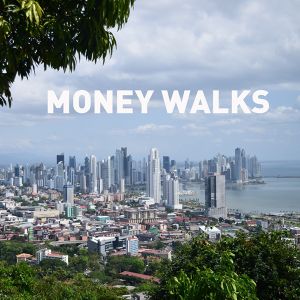
Rated as the #1 best country in the world by expats for liveability, we could also look at Panama. Its main industry is logistics (thanks to the Panama Canal), with offshore banking as its second leg. They also have mining, agriculture and manufacturing. The attractiveness to foreign investors is that you are only taxed on income generated in Panama (not any foreign income streams) with a top personal tax rate of 25% (cutting in at $USD50,000) and just 10% CGT (Capital Gains Tax). VAT (or GST) is 7% (10% on alcohol and 15% on tobacco).
So the question we should be asking is: “Why can these first world countries function so well with a fraction of the taxes?”
Australia’s tax take is 30.2% of GDP and rising, Singapore is 13.6%, Panama 11.3%, USA 25.6%, China 20.4%. Sweden is a “previously socialist” outlier with 41.4% (the main part being the tax on consumption with a GST of 25%). Swedens total tax take is down 10 percentage points in the past 20 years because the growing Government was strangling the economy and killed off many companies. By comparison, Australia’s tax take in 2020-2021 was $593.1 billion, and rose to $839 billion in 2024-25, an increase of 41% in just 4 years. With an increasing tax take we are heading in the opposite direction to most developed countries.
Australia doesn’t have a tax revenue problem, we have a Government spending problem. Do we really need everything we “expect” Government to provide? Are we getting value for money?
And think for a moment about what will happen when our main tax payers have a downturn or pick up stumps and leave? Mining pays roughly $70 billion in direct taxes each year (over 50% of total company tax paid), plus provides jobs to people and suppliers that also pay taxes.
It might just be that less is more. Farmers always knew that if you milked a cow too hard, it stopped producing. As an example, our tobacco taxes have risen so high that criminal networks have taken over and the Government is collecting LESS tax from it ($16.3 billion in 2019 is now down roughly a third at $4-5 billion). Investor capital can also reasonably easily relocate elsewhere. Let’s hope we learn these lessons before it’s too late.
PS The above was a heavy read. I’ve always liked “The tax system explained in Beer”. Please scroll down for a lighter version of what is happening to our tax system.
Words from the wise
“A tax is a fine for doing well, a fine is a tax for doing wrong” – Mark Twain.
“The best way to teach your kids about taxes is to eat 45% of their ice cream” – Bill Murray.
“A fool is a man who knows the price of everything and the value of nothing.” – Oscar Wilde.
As always, Onwards and Upwards!
Fred Carlsson
General Manager
______________________________________________________________________________________________________
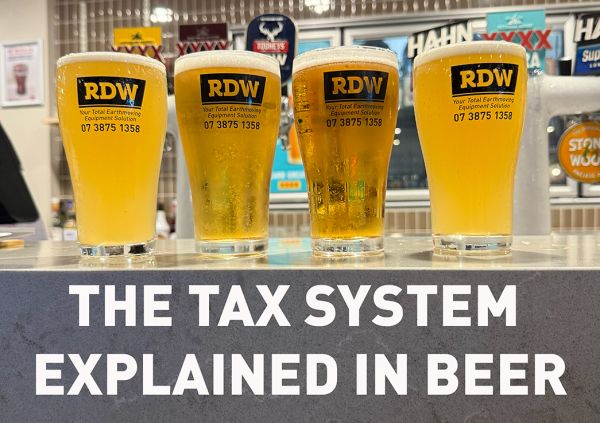
10 men go for beer and the bill for all 10 is $100. Paying their bill the way we pay our taxes, it would go something like:
The first 4 pay nothing.
The 5th pays $1.
The 6th pays $3.
The 7th pays $7.
The 8th pays $12.
The 9th pays $18.
The 10th pays $59.
The 10 drank every week and were happy until, one day, the owner caused them a problem. “Since you are good customers” he said “I’m going to reduce the cost of your beer by $20”. Drinks for the 10 now cost just $80.
They still wanted to pay the way we pay our taxes. The first 4 men were unaffected. But what about the other 6 men? The paying customers? How could they divide $20 so that everyone gets a fair share?
The owner suggested reducing each man’s bill by a higher %. Following the tax system, they’d been using, they worked out the amounts each should pay.
The 5th, like the first 4, now paid nothing (100% off).
The 6th paid $2 not $3 (33% off).
The 7th paid $5 not $7 (28% off).
The 8th paid $9 not $12 (25% off).
The 9th paid $14 not $18 (22% off).
The10th paid $49 not $59 (16% off).
The men began to compare their savings. “I only got $1 out of the $20” said the 6th man. He pointed to the 10th man “but he got $10”
“That’s right” said the 5th man. “I only saved $1. He got 10 times more than me!”
“That’s true!” shouted the 7th. “Why does he get $10 and I got $2? The wealthy get all the breaks!”
“Wait a minute” said the first 4 men “we didn’t get anything at all. This new tax system exploits the poor!” The 9 men surrounded the 10th and beat him up.
The next week the 10th man didn’t show up, so the 9 had beers without him. Paying the bill, they discovered something important – they didn’t have enough money between all of them to pay for even half of the bill.
The people who already pay the highest taxes naturally get the most benefit from a tax reduction.
Tax them too much, attack them for being wealthy and they might not show up anymore.